

Extension Blending Results That Look Natural

A braided style can have beautiful length, neat parts, and the right overall shape, yet still feel unfinished if the added hair does not blend naturally. The best extension blending results are not about making every strand identical. They come from choosing the right color, texture, length, and finishing approach so the extensions support your look instead of distracting from it.
For traditional braids and knotless braids, that polished blend is part of the full service experience. It affects how your style looks in natural light, how it photographs, and how confident you feel wearing it from day one through the final week.
What Natural Extension Blending Results Look Like
A natural-looking blend starts at the base of each braid. The extension hair should join your natural hair cleanly, with an even transition that does not create an obvious line of contrast. From there, the braid should hold a consistent size and pattern from root to end.
The goal is not always for the extension color to disappear completely. A subtle mix of tones can add dimension, especially when your natural hair has warm highlights, darker roots, or a soft color variation. What matters is that the contrast feels intentional. A braid color that complements your hair and complexion will usually look more polished than a shade chosen only because it is popular.
Length also changes the result. Very long braids can be striking, but they need enough fullness through the middle and ends to look balanced. Shorter or medium lengths often create a lighter, more natural movement. Neither choice is better for everyone. The right look depends on your personal style, daily routine, and the statement you want your braids to make.
The Details Behind Clean Blending
Quality extension blending is visible in the small details. Clean parting gives every braid a defined place and prevents the style from looking crowded at the scalp. Consistent tension helps braids sit smoothly without unnecessary pulling. A controlled amount of extension hair keeps the braid from becoming bulky at the root or thin at the ends.
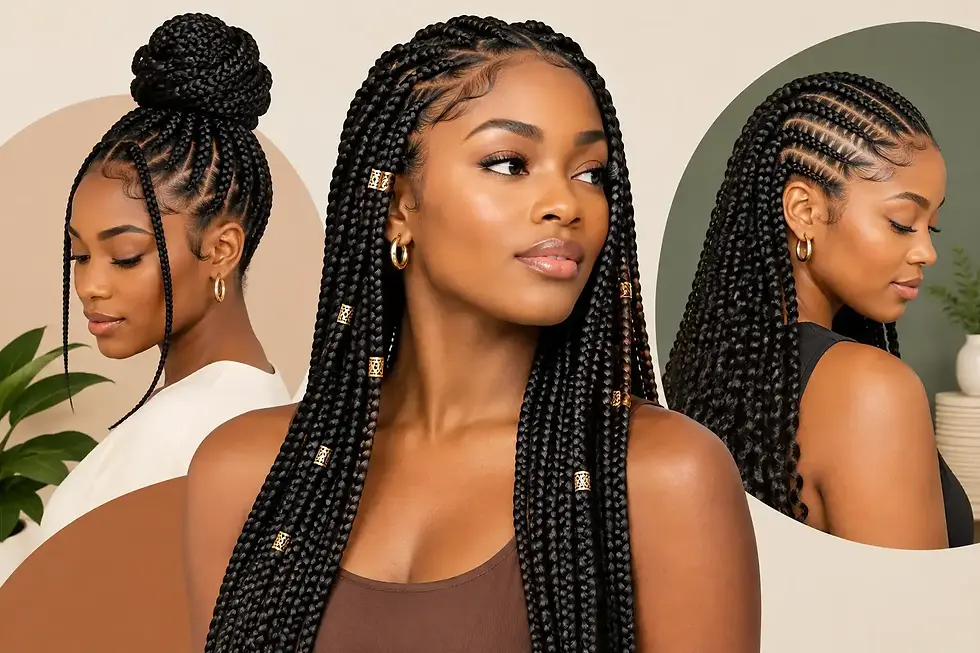
This is especially noticeable with knotless braids. Because the added hair is fed in gradually, the braid can begin with a softer, flatter appearance near the scalp. When done with precision, the transition looks refined and the finished style has an easy flow.
Traditional braids create a different kind of finish. They can offer a crisp, classic look with clear structure from the start of each braid. The extensions still need to be distributed evenly so the finished style feels balanced across the entire head. Whether you choose traditional or knotless braids, consistency is what makes the style look complete.
Color Matching Is More Than Choosing Black or Brown
Color is one of the first things people notice, particularly around the hairline and at the ends. A shade that is too dark can make natural hair look faded by comparison. A color that is too light or too warm can look disconnected from the base of the style.
The most flattering option may be a close match, a subtle blend of neighboring shades, or a purposeful accent color. If you are considering color, think about what you wear often, how you like your makeup to look, and whether you want a soft everyday style or a more noticeable finish. Bringing a few inspiration photos to your appointment can help communicate the direction you like without requiring an exact copy of someone else’s hair.
At Traditional Braids, core braid services include hair, which removes one more step from your preparation. If you have a specific color vision or want an elevated boho finish, discuss it before your appointment so the style can be planned with the right overall balance.
Texture, Finish, and the Look You Want
Extension hair has its own texture and sheen. A polished braid style does not require it to match every curl pattern in your loose hair, because the hair is being braided. Still, texture matters at the edges, around leave-out if any is planned, and at the ends.
A sleek finish can create a crisp, classic braid look. A softer finish may feel more relaxed and dimensional. For clients choosing a boho style, human hair additions can bring movement and a more textured appearance. Those loose pieces should be placed with intention. Too few can look accidental, while too many can overwhelm the braid pattern and make the style harder to maintain.
The human hair boho add-on is a good choice for clients who want that enhanced, fuller boho look. It is not necessary for every style. If your priority is a clean, long-lasting braided finish with minimal daily styling, a classic traditional or knotless braid service may suit you better.
Why the Hairline Matters So Much
The hairline is where blending becomes most personal. Braids should frame your face neatly while respecting the natural density and sensitivity of your edges. A polished result is never worth discomfort.
During your appointment, speak up if you feel painful tension. A little firmness can be expected with a fresh braid style, but persistent pulling, headaches, or sharp discomfort are signals that the style needs attention. Your comfort matters just as much as the finished photos.
The same principle applies to braid size. Smaller braids can offer more detail and versatility, while larger braids may be quicker to install and lighter to wear. Smaller is not automatically better. The best choice is one that fits your hair, scalp comfort, lifestyle, and desired maintenance level.
How to Get Better Extension Blending Results at Your Appointment
Start with a clear idea of the finished look, not just the braid name. Let your braider know your preferred length, part size, color direction, and whether you want a classic or boho finish. Mention any areas of your scalp that are sensitive, as well as previous braid experiences that felt too tight or too heavy.
Come with your hair ready according to the appointment instructions. Clean, detangled hair helps create smoother sections and gives the style a stronger foundation. Avoid waiting until the appointment begins to decide on a major color change or a different braid length if you can. Small choices made in advance help the service move smoothly and help your final look feel more intentional.
Inspiration photos are useful when they show the details you actually want: the braid size, the parting pattern, the color placement, or the amount of boho hair. One photo may have a length you love but a color you do not. Another may show the exact fullness you want. Pointing out those preferences gives your braider a clearer picture.
Keeping the Finished Look Polished
Your blending results continue after you leave the chair. Protecting your braids at night helps preserve the clean finish and keeps loose hair from creating unnecessary fuzz. Cover your braids with a satin or silk scarf, or use a satin pillowcase if a scarf does not stay in place.
Keep scalp products light. Heavy buildup near the roots can make the style look dull and can attract lint. If you are refreshing your scalp, apply product carefully and avoid soaking the braid lengths. For boho styles, gentle handling is especially helpful because the loose hair is designed to have movement, not constant friction.
Pay attention to the age of the style as well. Even beautifully installed braids eventually show natural growth and wear. Removing a style at the appropriate time protects your hair and makes room for your next polished appointment.
The right braids should look like they belong to you: balanced at the scalp, consistent through the lengths, and finished with care. Choose the look that fits your life, share the details that matter to you, and schedule a time that lets you leave feeling put together and confident.

Comments