

Braid Maintenance Routine for a Polished Look

Fresh braids should look polished beyond the first few days. A consistent braid maintenance routine helps preserve clean parts, protect your natural hair, and keep your style feeling comfortable from your install through take-down. The goal is not to pile on products or fuss with your braids all day. It is to give your hair the right amount of moisture, scalp care, and protection so your look stays neat.
Whether you wear traditional braids or knotless braids, small daily habits make the biggest difference. Your lifestyle matters too. A client who works out often, spends time at the beach, or wears hats regularly may need a few extra touch-ups compared with someone whose style has less daily friction.
Start Your Braid Maintenance Routine on Day One
The first few days after your appointment set the tone for the life of your braids. Your scalp may feel slightly sensitive at first, especially if you are not used to a fresh install. Give yourself time to adjust before pulling your braids into high ponytails, tight buns, or other styles that add tension at the hairline.
Keep your hands out of your braids as much as possible. Constantly separating, twisting, or pulling at them can make the style look older sooner. It can also create frizz around the roots, even when the braids themselves are still in great shape.
If any area feels uncomfortably tight, painful, or irritated, do not try to wait it out. Comfort matters. A protective style should support your everyday confidence, not leave you with a sore scalp. Addressing discomfort early is always better than adding oils, sprays, or tension to an already sensitive area.
Moisturize Without Creating Buildup
A dry scalp can make braids feel itchy and dull, but too much product can cause the opposite problem: buildup, flakes, and a heavy finish. Use a light scalp moisturizer or braid-friendly leave-in product as needed, focusing on your natural hair and scalp rather than saturating the full length of every braid.
For many clients, moisturizing two or three times a week is enough. If your scalp is naturally dry, you may need more frequent hydration. If your roots get oily easily, use less product and pay attention to how your scalp responds. There is no single schedule that works for every head of hair.
Apply products in small sections and use a light hand. A nozzle bottle can help you reach the scalp cleanly without coating the braids. Massage gently with your fingertips instead of scratching with your nails. Scratching can irritate the scalp and disturb clean parts.
Heavy butters, thick gels, and large amounts of oil may feel moisturizing in the moment, but they can leave residue behind. When product accumulates at the roots, it can make your braids look less fresh and make cleansing more difficult later.
Watch for flakes before adding more oil
Not every flake is dryness. Sometimes it is product buildup, sweat, or residue from an overly rich scalp product. If you keep adding oil to a scalp that needs cleansing, the issue can become more noticeable. When in doubt, simplify your products and cleanse gently rather than layering more on top.
Protect Your Braids While You Sleep
Your nighttime routine is one of the easiest ways to extend a polished finish. Friction from cotton pillowcases can pull moisture from the hair and create frizz around the edges. Cover your braids with a satin or silk scarf, bonnet, or wrap before bed. A satin pillowcase is also a smart backup for nights when your head covering slips off.
Long braids benefit from being gathered loosely before sleep. You can place them in a loose low ponytail or gently lay them upward into a bonnet. Avoid tight elastic bands or anything that pulls at the roots. The purpose is to reduce friction, not create another source of tension.
If you wear knotless braids, especially longer lengths, do not sleep with the weight of all your braids pulled to one side night after night. Switching the position of your braids can help keep pressure more balanced around the scalp.
Keep Your Scalp Clean Between Wash Days
Braids can and should be cleansed when your scalp needs it. Sweat, exercise, warm weather, and product use all affect how often you need to wash. Some clients are comfortable cleansing every two to three weeks, while others need a gentler refresh sooner. Your scalp is the best guide.
Use diluted shampoo and focus on the scalp and roots. Apply carefully, then massage lightly with the pads of your fingers. Let the lather move down the braids as you rinse instead of scrubbing the lengths aggressively. This helps remove buildup while keeping unnecessary friction to a minimum.
Rinse thoroughly. Leftover shampoo can cause itching and leave a dull film at the roots. After cleansing, gently press your braids with a clean towel to remove excess water. Do not twist, rub, or bunch them roughly.
Drying matters just as much as washing. Never leave thick braids damp for long periods. Sit under a hooded dryer if available, use a blow dryer on a suitable setting, or allow enough time for complete air-drying in a well-ventilated space. Going to bed with wet braids can lead to odor and discomfort, and it may shorten the fresh look of your install.
Refresh the Look Without Overworking It
Even well-maintained braids may develop a little frizz around the hairline over time. That is normal. Your natural hair continues to grow, and everyday movement affects the finish. The answer is usually gentle maintenance, not a full restyle at home.
A light foam mousse can help smooth minor flyaways when used sparingly. Apply a small amount, smooth it over the surface of the braids, then wrap your hair with a scarf for a few minutes. This is especially helpful before a special event, a workweek, or a weekend out.
Be careful with edge control. A small amount can give the hairline a refined finish, but daily heavy use may create buildup and require more frequent cleansing. If you use it, apply it gently and avoid brushing your edges repeatedly throughout the day.
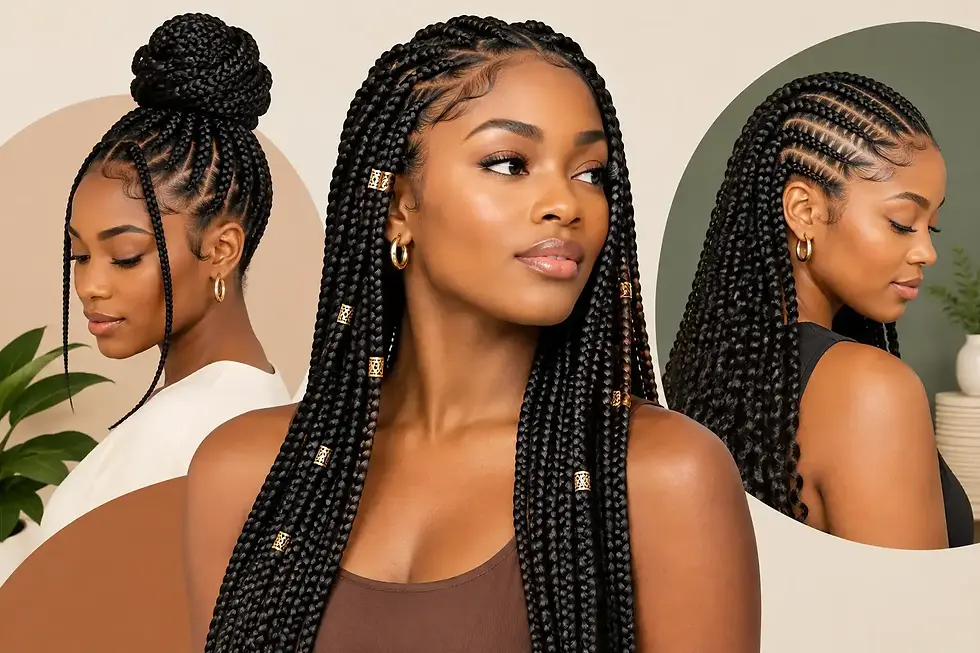
For a boho finish with added loose human hair, use even more care around the curly pieces. Separate tangles patiently with your fingers and avoid brushing aggressively from root to end. Light moisture and gentle handling will help the curls stay soft without disturbing the braided foundation.
Choose Low-Tension Everyday Styles
A major benefit of braids is versatility, but not every updo is ideal every day. Repeated high buns, tight ponytails, and pulled-back styles can place stress on your edges and roots. Rotate your look with low ponytails, half-up styles, loose buns, or braids worn down.
Pay attention to what happens after you remove a style. If your scalp feels tender or your hairline looks pulled, loosen your next style. A polished look should not come at the expense of comfort.
You should also be mindful of hats, helmets, and headbands. They are fine when needed, but frequent rubbing can create frizz at the front and around the nape. A satin-lined option or a scarf underneath can reduce friction when your routine calls for extra coverage.
Know When It Is Time for Take-Down
Braids are protective when they are maintained well and worn for an appropriate amount of time. Leaving them in too long can lead to excess shedding, tangling at the roots, dryness, and buildup. The right take-down date depends on your braid size, hair growth, scalp condition, and home care.
A style may still look good from a distance while your roots are telling a different story. If you see significant buildup, heavy matting near the base, persistent itching, or a lot of new growth that makes the braids feel loose, it is time to plan your removal. Give your hair a break to cleanse, detangle, and condition before your next install.
Do not rush the take-down process. Work in sections, add slip with a conditioner or detangling product, and gently remove shed hair as you go. Patience protects the length you worked hard to retain.
Keep the Finish Worth the Appointment
A great braid maintenance routine is simple enough to follow on busy mornings and late nights: protect your braids while you sleep, moisturize with intention, cleanse your scalp when needed, and avoid tension that your hairline does not need. Those habits help your style hold its shape and keep your natural hair supported underneath.
When you are ready for your next polished install, choose a style that fits your schedule, your comfort, and the way you want to show up. Traditional Braids is here for clients who value quality, precision, and attention to detail from the first clean part to the final finish.

Comments